

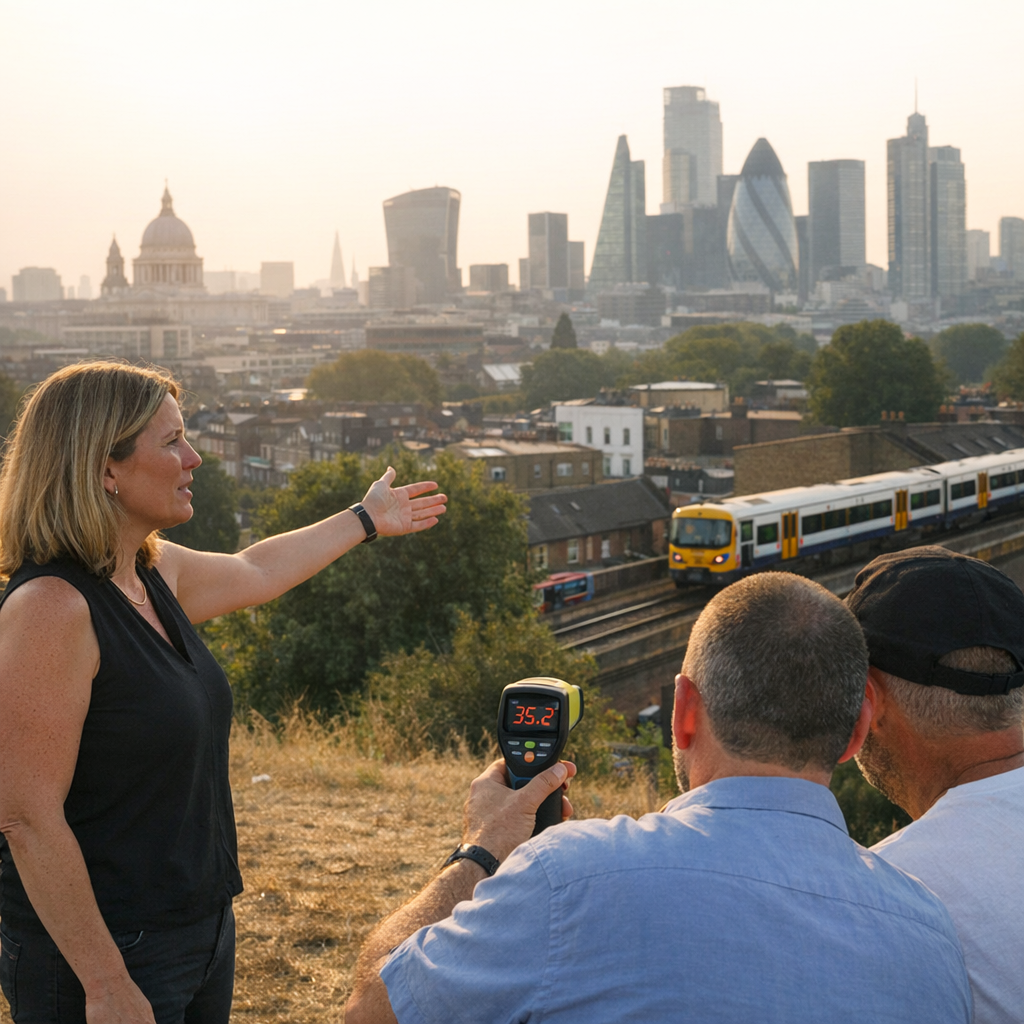
London’s urban landscape, characterized by dense buildings and extensive infrastructure, contributes to a phenomenon known as the Urban Heat Island (UHI) effect. This effect results in higher temperatures within the city compared to surrounding rural areas, particularly noticeable during calm, clear nights.
What is the Urban Heat Island Effect?
The UHI effect occurs when urban areas experience significantly warmer temperatures than their rural counterparts. This temperature disparity is primarily due to the absorption and retention of heat by urban materials such as concrete and asphalt, coupled with reduced vegetation and green spaces. In London, this effect can lead to temperature differences of up to 10°C between the city center and outlying areas.
Impacts on London
The intensified heat in urban areas poses several challenges:
- Health Risks: Elevated temperatures can exacerbate health issues, particularly among vulnerable populations such as the elderly and those with pre-existing conditions.
- Energy Consumption: Increased demand for air conditioning and cooling systems leads to higher energy consumption and associated costs.
- Environmental Stress: Elevated temperatures can strain local ecosystems and reduce air quality.
Mitigation Strategies
To address the UHI effect, several strategies are being implemented:
- Enhancing Green Spaces: Increasing the number of parks, green roofs, and urban gardens helps absorb heat and provide cooling through evapotranspiration.
- Implementing Cool Roofs and Pavements: Using reflective materials for roofs and pavements reduces heat absorption.
- Promoting Sustainable Urban Planning: Designing buildings and urban layouts that maximize natural ventilation and incorporate shading elements.
By understanding and addressing the Urban Heat Island effect, London can work towards creating a more comfortable and sustainable urban environment for all its residents.