

By Amelia Evans
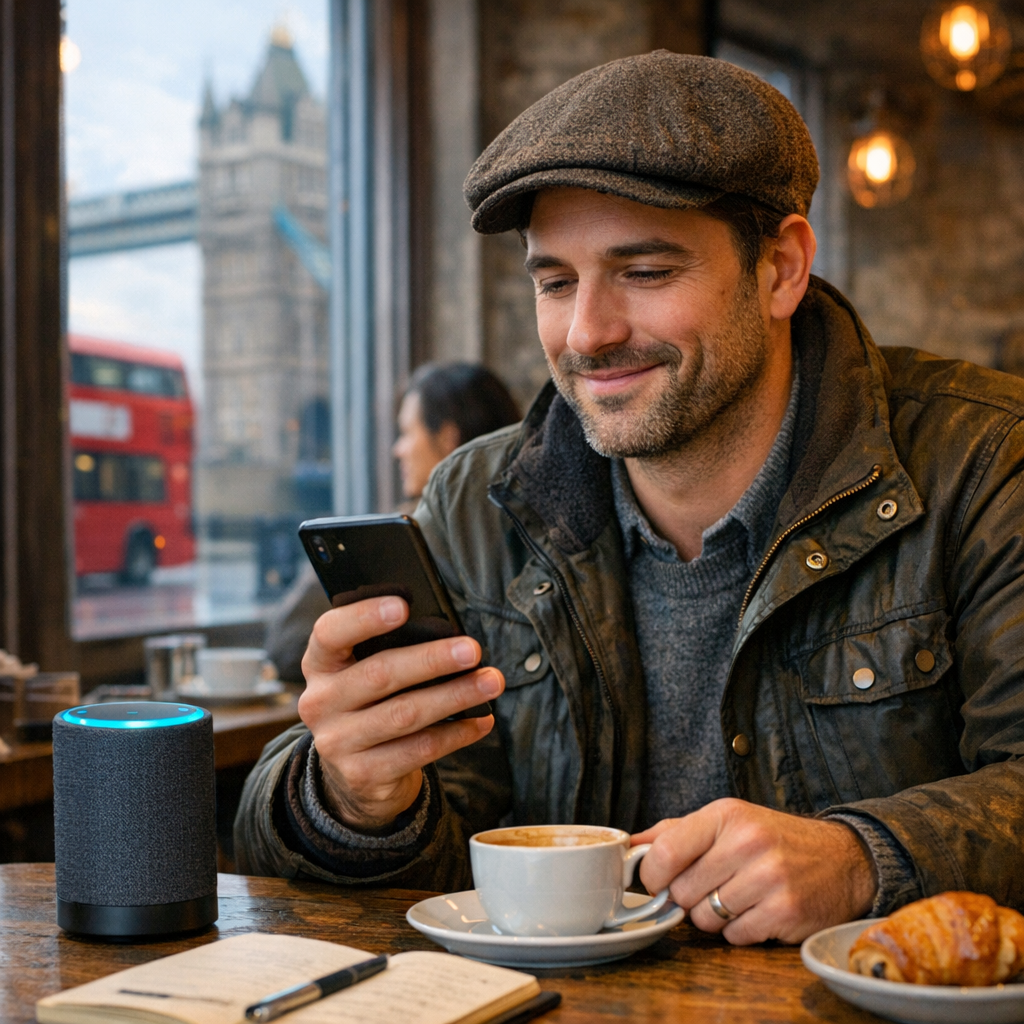
AI often feels like a concept reserved for science labs or media headlines, but it’s now quietly embedded in many Londoners’ everyday routines—often in ways we don’t immediately notice.
Everyday tools, real effects
A recent UK survey found that over 70% of people had used AI in the past month. The most common uses include predictive text when messaging, virtual assistants like Siri or Alexa, and recommendation algorithms for shopping or streaming. These systems help with small tasks—writing an email, deciding what to watch, finding a recipe—but they save time and reduce daily friction. EY reported AI is now supporting navigation, customer support, even identifying medical symptoms.
At work: boosting efficiency, raising questions
In workplaces across London, AI use is growing fast. About half of UK workers now use AI weekly, with one in five using it almost every day. Of those, many say AI tools lower stress—by automating mundane tasks or helping organise workload. But there’s a trade-off: confidence in using AI is mixed. While some feel more capable and liberated, others worry about privacy, job displacement, or misusing AI by accident. The confidence gap is especially sharp among older adults or those less tech-familiar.
London as a tech-and-AI hub
London isn’t just a passive consumer of AI—it’s a global centre for building it. The city leads the UK in VC investment into AI startups, and hosts key institutions such as the Alan Turing Institute. Reports show that AI and fintech make up a large share of venture deals here. With this ecosystem comes infrastructure: incubators, accelerating hubs, and regulatory initiatives are making space for AI to be tested in real-world settings—especially in health.
AI in healthcare: testing the edges
London’s NHS organisations are now part of a regulatory sandbox allowing AI medical device makers to run pilots in genuine clinical contexts. That means innovations like diagnostic support tools, remote monitoring, or predictive analytics will be assessed locally, so patients might benefit sooner—but with oversight built in to ensure safety and utility.
Risks and public sentiment
Despite the benefits, many people remain uneasy. Common concerns include how companies use personal data, how to tell fact from fake online, and whether AI will cost jobs. Surveys suggest that a noticeable proportion of the public sees the risks as equal to—or greater than—the benefits. Trust in both corporate and governmental institutions to manage AI responsibly is lower than many feel comfortable with.
What Londoners can do
To make the most of AI and mitigate its risks, here are a few steps:
- Learn what AI tools are already doing in your life—your phone, your emails, your travel planner—and what that means for privacy or security.
- Explore new tools? Start small. Use AI for specific tasks—perhaps summarising documents, helping with language, or organising admin—so you build confidence without overwhelming reliance.
- Push for transparency. Ask services you use how they collect and use your data, whether AI decisions can be explained, and whether there are human controls.
- Support local innovation. London’s regulatory sandboxes and health tech innovators depend on input—public feedback, patient participation, and local trial involvement help shape safer, more useful AI.
AI is no longer something that’s “coming soon.” For many in London, it’s already here—woven into daily life in ways both helpful and challenging. Recognising what’s changing—and what we want from that change—is the only way to shape a future where technology works for everyone.